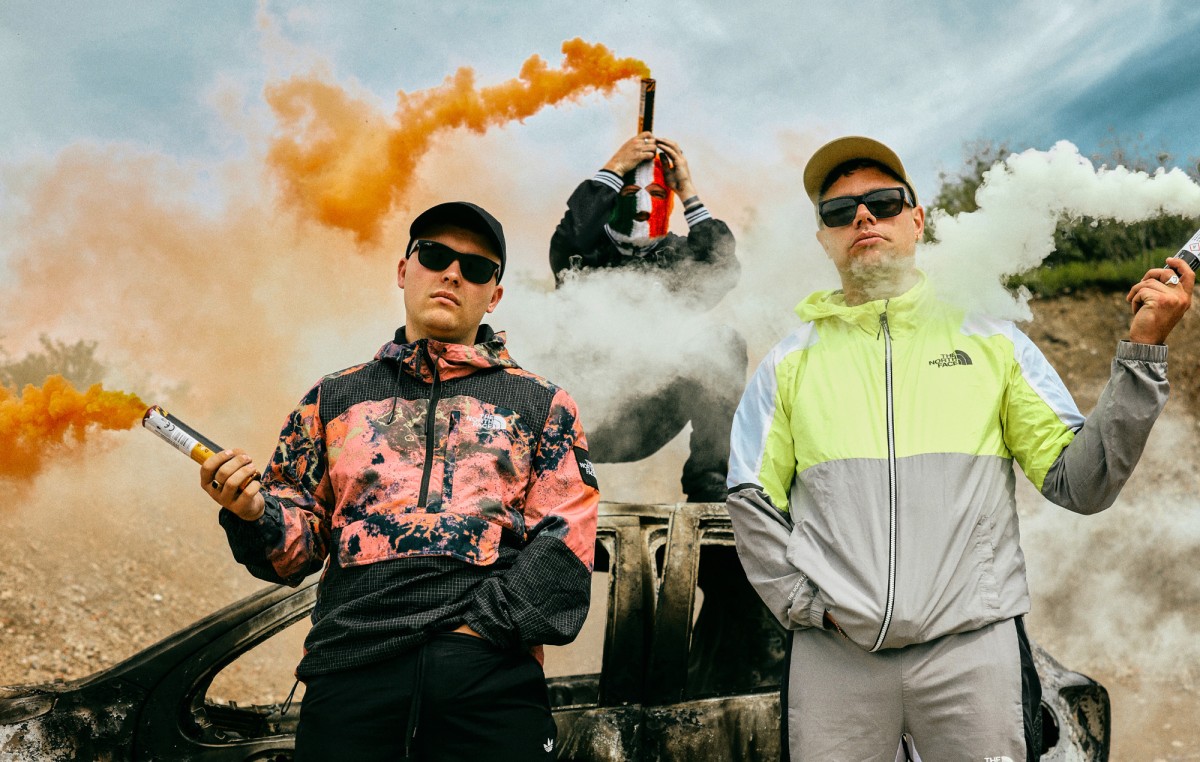

As state pressure mounts and shows are cancelled, the controversy around Kneecap exposes a deeper battle over free speech, political dissent, and the right to protest through music
Words by Amped | 02 May, 2025
The cancellation of Kneecap shows, a rap group known for their unapologetically political edge and fierce cultural identity, is not simply a consequence of “offensive comments.” It’s a symptom of a broader, more concerning trend: the weaponisation of public outrage and state machinery to silence political dissent, especially when it aligns with solidarity for Palestine.
Let’s be clear: the comments made by Kneecap during their shows in late 2023 and 2024 – notably the “Up Hamas, up Hezbollah” line and their incendiary remark about Tories – were provocative, ill-judged, and reckless. Kneecap themselves have acknowledged as much. But to conflate spontaneous on-stage expressions, made in the charged environment of live performance, with terrorism or criminal incitement is a deliberate distortion. It’s not about safety or law – it’s about censorship.
Like punk before it, rap has always been a battleground for radical thought, anger, and protest. Kneecap are West Belfast rappers — their art is shaped by the scars of a region still wrestling with the legacies of colonialism, violence, and resistance. Their lyrics and stage presence are raw, unfiltered, and often provocative. That’s the point. Music, particularly politically-charged music, is built on the freedom to challenge, to offend, and to speak truth to power. Without that, it ceases to be art and becomes propaganda.
There is no evidence that Kneecap are terrorists or that they encourage terrorism. They have condemned all attacks on civilians unequivocally and have denied supporting Hamas or Hezbollah. These clarifications, however, are brushed aside by those eager to make an example of them — not because they’re dangerous, but because they’re dissenting. Their real crime? Daring to speak openly about Palestinian suffering and British hypocrisy.
Let’s not pretend this controversy grew organically. The footage being scrutinised is over a year old in some cases — including their “dead Tory” remark from November 2023, which went largely unnoticed until now. What’s changed? The political climate.
Since their critically acclaimed film Kneecap hit screens, and with their rising international popularity post-Coachella, the group has become a high-profile target. Some suspect this is less about Kneecap themselves and more about targeting their producer, Trevor Birney — an award-winning filmmaker who has previously exposed police collusion in Northern Ireland, particularly in the No Stone Unturned documentary on the Loughinisland massacre. The police couldn’t break Birney through the courts, so now they’re going after those around him.
When counter-terrorism resources are used to monitor musicians while the perpetrators of real terror – like the loyalist killers at Loughinisland – remain untouched, the system’s priorities are laid bare. As Barry McCaffrey, co-director of No Stone Unturned, said: “They wasted police time and resources going after us instead of the Loughinisland killers.” The same is true today.
Thankfully, the artistic community isn’t staying silent. Over 100 artists, including Massive Attack, Fontaines D.C., Primal Scream, and Tom Morello, have signed an open letter defending Kneecap’s right to free expression. These are not fringe voices. These are artists of international stature, united in their belief that censorship – especially under the guise of “national security” – is a far greater danger than any song lyric.
Massive Attack rightly pointed out that we’ve spent more time debating a Kneecap lyric than the killings of Palestinian medics. The disparity is grotesque. The Jo Cox Foundation and others have voiced concern over “incitement,” but Kneecap have been unequivocal in their condemnation of political violence. The excerpts being reviewed are, by their own admission, taken out of context – stripped of the performative, anarchic energy that defines the group’s work.
Despite the backlash and show cancellations in Germany and Portsmouth, Kneecap have not backed down. Instead, they’ve announced replacement gigs — most notably three new dates in Plymouth to replace the one show that was dropped. Their message: “Cancel one show? Here’s three more.”
This is not just a band playing gigs. This is resistance through art, a refusal to be intimidated into silence. These shows deserve to be supported — not just by fans of rap, but by anyone who believes in the fundamental right to dissent.
Germany’s cancellation of their shows is particularly revealing, given the country’s rigid hate speech laws. But it’s worth asking: is this really about law and order? Or is it about sanitising dissent to make it palatable to Western powers currently backing a brutal war in Gaza?
Free speech is not a slogan to be wheeled out only when it’s convenient. If musicians, especially from oppressed or marginalised communities, are not allowed to speak passionately and politically — even if clumsily — then who is?
Kneecap are not perfect. They are loud, messy, confrontational — and deeply necessary. Their music forces us to confront uncomfortable truths, including Britain’s own colonial legacy, double standards, and complicity in foreign atrocities.
To cancel Kneecap now is to send a chilling message: that the state can determine which political expressions are acceptable, and which will be investigated as terror.
Instead, let’s support the alternative events being put in place — attend the shows, share their music, and stand with the growing coalition of artists defending their right to speak. Let’s keep the conversation focused where it belongs: on justice, on Gaza, and on the right of artists to challenge power without being branded criminals.


Leave a Reply